
Last Updated: 2026-11-12
- Online water quality monitoring rests on five sensors: pH, turbidity, dissolved oxygen, conductivity and temperature. Chlorine, COD, ammonia and suspended solids are added by application.
- pH accuracy varies almost 10×: our digital PH01 electrode is specified at ±0.02 pH, the PH02/PH03 industrial transmitters at ±0.15 pH. The second is fine for sewage and fish ponds, not for tight dosing control.
- Turbidity accuracy has a fixed NTU floor: "±3% or ±1.5 NTU, whichever is greater" means a 2 NTU sample can read 0.5–3.5 NTU. Choose the lowest range that covers your water.
- Optical DO probes need no flow and no electrolyte; budget for a fluorescent cap roughly once a year.
- Most digital probes default to Modbus RTU at 4,800 baud. On a shared RS485 bus, change addresses before you install, not after.
Quick Answer: What Is a Water Quality Sensor?
A water quality sensor is a probe that measures one chemical or physical property of water continuously and sends it to a controller or data logger. There is no single sensor that measures “water quality”: an online monitoring system combines several probes, usually pH, turbidity, dissolved oxygen (DO), conductivity and temperature, and adds parameter-specific sensors such as residual chlorine for drinking water, or COD and ammonia nitrogen for wastewater.
For each probe, four choices decide whether the data is usable: the measuring principle, the range and accuracy at the values you actually expect, the output (4–20 mA or RS485 Modbus), and the installation (immersion depth, pressure, temperature, fouling). This guide covers the three most common parameters in detail, then the rest in a summary table, using the specifications from the datasheets of the probes in our environmental and water quality sensor range.
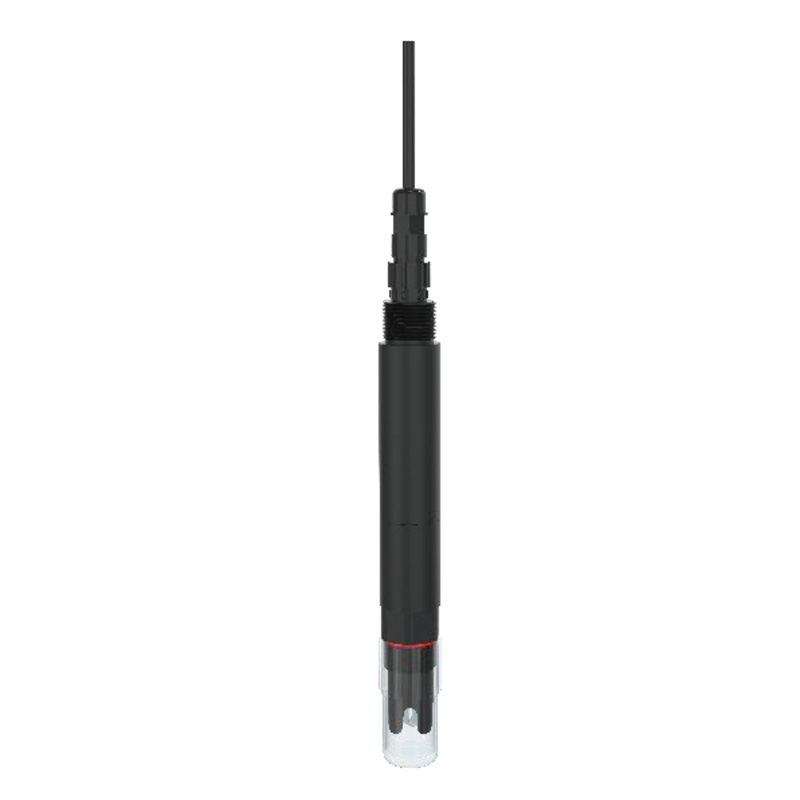
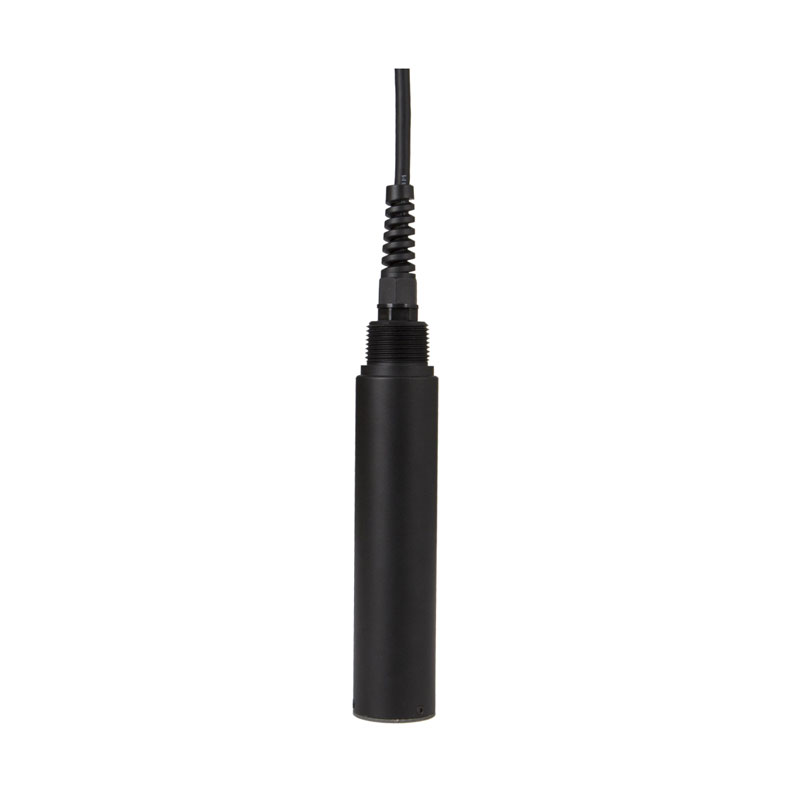
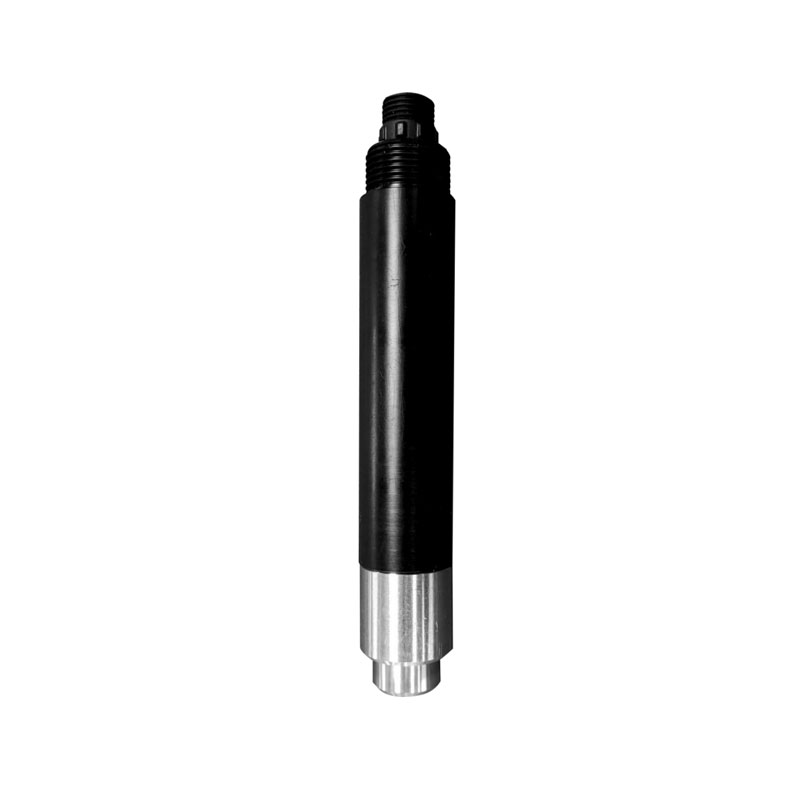
pH, Turbidity and Dissolved Oxygen Sensors at a Glance
| Parameter | What it tells you | Principle | Range (our models) | Accuracy (our models) | Output |
|---|---|---|---|---|---|
| pH | Acidity / alkalinity; corrosion, dosing, biology | Glass or composite electrode with temperature compensation | 0–14 pH | ±0.02 pH (PH01); ±0.15 pH (PH02, PH03) | RS485 Modbus (PH01, PH03); 4–20 mA / 0–5 V / 0–10 V (PH02) |
| Turbidity | Cloudiness from suspended particles; filtration performance | 90° scattered light, infrared LED | 0–20 up to 0–4,000 NTU by model | ±3% or ±1.5 NTU (0–20 NTU, ZD01); ±5% FS (ZD02) | RS485 Modbus (ZD01, ZD03); 4–20 mA / 0–5 V / 0–10 V (ZD02) |
| Dissolved oxygen | Oxygen available to fish and aerobic bacteria; aeration control | Fluorescence quenching (optical) | 0–20 mg/L (0–200% saturation) | ±3% FS (LDO01, LDO02) | 4–20 mA / 0–5 V / 0–10 V (LDO01); RS485 Modbus (LDO02) |
Three Spec-Sheet Details That Decide Whether the Data Is Usable
Most guides list the parameters and stop. When you compare actual datasheets, three details matter more than the headline range.
1. pH accuracy differs by almost ten times between probe classes
Both kinds of pH probe in our range read 0–14 pH with 0.01 pH resolution, but the accuracy is not the same. The PH01 digital pH sensor is specified at ±0.02 pH; the PH02 and PH03 industrial transmitters at ±0.15 pH (with ±0.02 pH repeatability). Resolution is what the display shows; accuracy is how close it is to the truth. For sewage, agriculture and aquaculture, ±0.15 pH is enough. For drinking water, where the EPA secondary standard range is pH 6.5–8.5, or when a dosing pump has to hold a set point within a tenth of a pH unit, specify the higher-accuracy electrode.
2. Turbidity accuracy has a floor in NTU, not just a percentage
Turbidity specs are written as “±X% or ±Y NTU, whichever is greater”. The ZD01 is ±3% or ±1.5 NTU on its 0–20 NTU range, ±3% or ±2 NTU on 0–100 NTU, and ±5% or ±3 NTU on 0–1,000 NTU. At 500 NTU the percentage dominates; at 2 NTU the fixed floor dominates, and a 0–1,000 NTU probe could read anywhere from 0 to 5 NTU. Two rules follow:
- Choose the lowest range that covers your water. Raw river water, wastewater and aquaculture ponds suit 0–100 or 0–1,000 NTU; clarified or filtered water needs the 0–20 NTU version.
- Filtered drinking water compliance is a different instrument. US surface-water plants using conventional filtration must keep combined filter effluent at or below 0.3 NTU in 95% of monthly samples. Immersion probes like these are used for raw water, process and wastewater monitoring; regulatory finished-water turbidity is measured with low-range flow-through turbidimeters.
3. Digital probes share defaults that collide on one bus
Most of our digital probes (PH03, ZD01, ZD03, LDO02, EC01, COD01, NHN01, XFW01) use RS485 Modbus RTU, and several datasheets list a default baud rate of 4,800. If you connect five new probes to one data logger, they arrive with the same default settings and cannot be told apart. Set a unique Modbus address on each probe, one at a time on the bench, and set all of them to the same baud rate before installation. Our 4-20mA vs RS485 Modbus vs HART guide explains when an analog output is the simpler choice.
pH Sensors
pH is measured with a glass membrane electrode and a reference electrode, usually combined in one body. The voltage between them changes by about 59 mV per pH unit at 25 °C, and that slope changes with temperature, which is why every probe here has temperature compensation (automatic on PH01; switchable automatic or manual on PH03; optional 0–80 °C on PH02).
- PH01 digital pH sensor: 0–14 pH, ±0.02 pH, RS485 Modbus, IP68 housing, maximum pressure 3 bar, 0–50 °C, POM + titanium body, NPT 3/4 thread for submersible mounting, 10 m default cable. Supports two- or three-point calibration.
- PH02 industrial pH transmitter: 0–14 pH, ±0.15 pH, 4–20 mA / 0–5 V / 0–10 V, electrode rated 0–80 °C, 3/4” thread, 5–20 m cable, IP65 transmitter.
- PH03 industrial pH transmitter: the same electrode class with RS485 Modbus RTU and temperature reading.
Maintenance: pH electrodes drift. Plan regular calibration with pH 4, 7 and 10 buffers, keep the bulb wet, and treat the electrode as a consumable.
Turbidity Sensors
Online turbidity sensors shine an infrared LED into the water and measure the light scattered at 90° by suspended particles (the nephelometric method). The result is reported in NTU. Infrared light and an optical fibre or filter design reduce interference from colour and daylight.
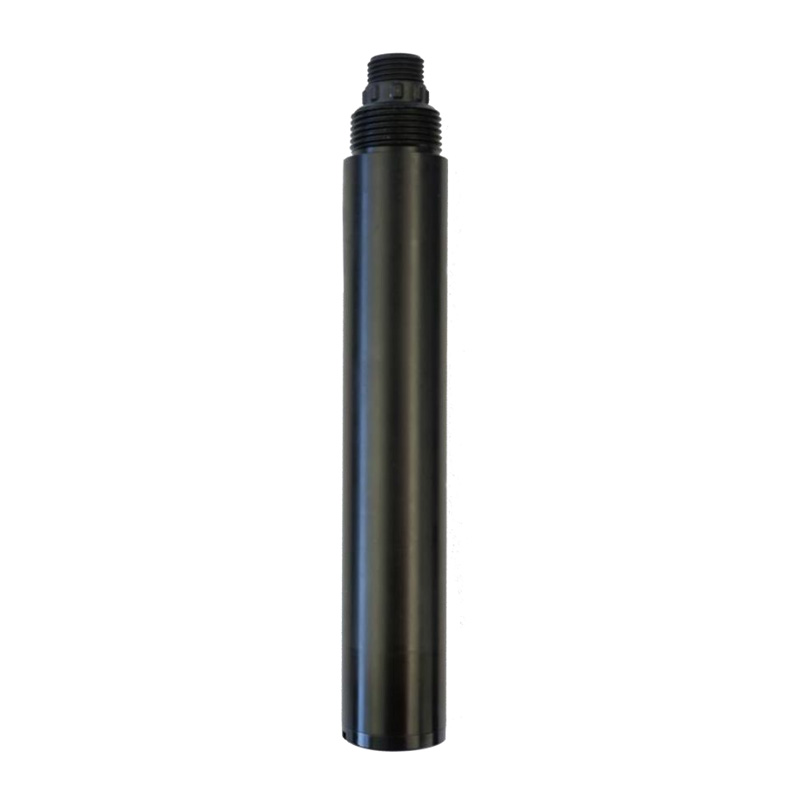
- ZD01 online turbidity sensor: 0–20, 0–100 or 0–1,000 NTU; RS485 Modbus; Pt1000 temperature compensation; IP68 for depths up to 20 m; 0.2 W at 12 V.
- ZD02 analog turbidity transmitter: 0–50, 0–200, 0–1,000 or 0–4,000 NTU; ±5% FS; 4–20 mA, 0–5 V or 0–10 V; IP68 probe, IP65 housing.
- ZD03 digital turbidity transmitter: 0–200 or 0–1,000 NTU; RS485 Modbus; Ø30 × 166.5 mm; rated to 0.6 MPa; two-point calibration.
Installation tips: mount the probe so bubbles cannot collect on the optical window, keep it away from the tank wall and bottom (reflections read as turbidity), and clean the window on a schedule. Where fouling is heavy, choose a self-cleaning probe such as the COD01, which also reports 0–200 NTU turbidity.
Dissolved Oxygen Sensors
There are two families of DO sensor:
- Electrochemical (polarographic or galvanic): an anode and cathode behind a gas-permeable membrane in electrolyte. Oxygen diffusing through the membrane is consumed at the cathode, so the sensor needs water moving past it, and the membrane and electrolyte need regular replacement.
- Optical (fluorescence or luminescent): a dye in a sensor cap glows when excited by light, and oxygen shortens or dims that glow. The sensor consumes no oxygen, needs no electrolyte and does not need flow, so it is the common choice for continuous monitoring in aeration basins and fish ponds.
Both of our DO probes are optical. The LDO01 measures 0–20 mg/L (0–200% saturation) at ±3% FS with 4–20 mA, 0–5 V or 0–10 V output; the LDO02 gives the same range over RS485 Modbus and also reports temperature. Both are rated IP68 and 0.6 MPa, with a 0–40 °C probe operating range. The LDO01 datasheet gives the fluorescent cap a normal service life of about one year, so include a spare cap in the annual budget.
Typical uses: aeration control in activated sludge plants (where DO set points drive blower energy), aquaculture (many warm-water fish farms aim to keep DO above about 5 mg/L), and river and lake monitoring.
Other Water Quality Sensors
| Parameter | Typical application | Our model | Key specification |
|---|---|---|---|
| Conductivity / TDS / salinity | Surface water, aquaculture, RO and process water | EC01, ECW01 | EC01: K=1 1–2,000 µS/cm or K=10 10–20,000 µS/cm, ±1% FS. ECW01: up to 100,000 µS/cm (K=10), ±1.5% FS. RS485 Modbus |
| Residual chlorine | Drinking water, distribution networks, pools, cooling water dosing | CL01 | 0–20 mg/L, 0.01 mg/L resolution, membrane-free constant-voltage electrode, 4–20 mA / voltage / RS485 |
| COD (+ turbidity) | Wastewater, surface water | COD01 | 0–500 mg/L equiv. KHP, dual-wavelength UV absorption, reagent-free, self-cleaning |
| Ammonia nitrogen | Wastewater, aquaculture, surface water | NHN01 | 0–100 ppm, ±1 ppm, automatic temperature and pH compensation |
| Suspended solids | Sludge, process and wastewater | XFW01 | 0–20,000 mg/L, ±5% FS, self-cleaning, light absorption |
For a combined system, our range also includes multi-parameter water quality analyzers that host several probes in one controller. If you also need to measure the water level or pressure at the same site, see our submersible level sensors and the guide to pressure transmitters for water treatment plants.
How to Choose Water Quality Sensors: 6 Questions
- What water and what decision? Compliance reporting, process control (dosing, aeration) and trend monitoring need different accuracy and calibration effort.
- Which parameters? Start with the parameters that drive a decision. Wastewater aeration needs DO; chlorination needs residual chlorine and pH; fish farms need DO, pH, temperature and often ammonia.
- What range will you actually see? Pick the lowest range that covers it, especially for turbidity, where the NTU floor dominates at low values.
- Where does the signal go? 4–20 mA into individual PLC inputs, or RS485 Modbus into a logger or gateway. Match supply voltage too: most of these probes run on 10–30 V DC (ZD01 12–24 V, EC01 7–30 V), and the 0–10 V output versions need 24 V DC.
- How will it be installed? Immersion depth and pressure (ZD01 up to 20 m; PH01 3 bar; LDO probes 0.6 MPa), temperature (several probes are rated 0–40 °C or 0–50 °C), cable length and mounting thread (most use 3/4” thread).
- Who will maintain it? Count the consumables (pH electrodes, DO caps, chlorine electrodes with about a one-year life) and the cleaning interval. In fouling water, self-cleaning probes save site visits.
Sourcing Notes: MOQ, Lead Time and What to Send
SIBXSUN supplies environmental and water quality sensors from partner production lines in China.
- MOQ: 1 piece for most standard models (flexible).
- Lead time: 2–3 days for in-stock items; 15–30 days for custom ranges, outputs or cable lengths.
- Samples: available, with freight on the buyer’s account.
- Terms: FOB Ningbo or CIF; T/T, PayPal or Western Union; 12-month warranty.
To quote quickly, send: parameters, expected ranges, water type, output (4–20 mA or RS485), supply voltage, cable length, installation method (immersion, pipe, flow cell), and quantity.
Related Guides
- 4-20mA vs RS485 Modbus vs HART: choosing sensor output signals
- Pressure transmitters for water treatment plants
- Groundwater monitoring well: which level sensor fits?
Frequently Asked Questions
What sensors are used for water quality monitoring?
The core online sensors are pH, turbidity, dissolved oxygen, conductivity and temperature. Systems add residual chlorine (drinking water, pools), COD and ammonia nitrogen (wastewater, surface water), suspended solids and ORP depending on the application.
How does a turbidity sensor work?
An infrared LED shines into the water and a detector at 90° measures the light scattered by suspended particles. More particles scatter more light; the result is reported in NTU, with temperature compensation and optical filtering against daylight.
What is the difference between optical and polarographic dissolved oxygen sensors?
Polarographic and galvanic sensors use electrodes behind a membrane and electrolyte; they consume oxygen, need flow and need membrane and electrolyte changes. Optical sensors measure how oxygen quenches the glow of a dye in a sensor cap; they consume no oxygen and need no flow. The cap is the main consumable (about one year on the LDO01).
How accurate does a pH sensor need to be?
About ±0.15 pH is usually adequate for wastewater, aquaculture and agriculture. For drinking water (EPA secondary range pH 6.5–8.5) or tight dosing control, choose a higher-accuracy electrode such as ±0.02 pH and calibrate it regularly.
Should water quality sensors use 4-20mA or RS485 output?
Use 4–20 mA when each sensor wires into its own PLC input. Use RS485 Modbus RTU when several sensors share one bus to a logger or gateway; give each a unique address and the same baud rate.
Planning a water quality monitoring point? Browse our environmental and water quality sensors or send your parameters, ranges and output and we will reply with matched probes, datasheets and an FOB Ningbo quotation.